
The Supreme Court of India has emphasised the importance of open access to all temples and 'maths' for everyone, warning that excluding any denomination would negatively impact Hinduism and divide society. This statement was made during hearings on petitions related to discrimination against women at religious sites and the scope of religious freedom.
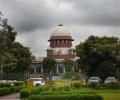
The Supreme Court has directed all states and Union territories to provide comprehensive information on acid attack cases, including case status, victim details, and rehabilitation measures.

'The world feels quieter today.... Asha Bhosle wasn't just a legend -- she gave the world melodies that will outlive us all.'

The Supreme Court of India has stated that the time has come for a Uniform Civil Code (UCC), while hearing a plea challenging the Shariat law of 1937. The court suggested that the legislature should address the issue of discrimination against Muslim women.

The Supreme Court has directed the establishment of independent appellate tribunals, led by former high court judges, to address appeals related to voter list exclusions in West Bengal, while also cautioning against undermining judicial officers involved in the process.

Farhan Akhtar seems proud of 120 Bahadur, his second war epic after Lakshya -- he doesn't direct this one, he stars in it -- and invited film folk to a special screening in Mumbai.

The Supreme Court of India has emphasized the need to sensitize male teachers and students about menstruation to eliminate stigma and ensure the effective use of menstrual hygiene facilities in schools.

If dark and twisted crime thrillers and trauma-led violence interest you, you can binge-watch Daldal over the weekend, endorses Divya Nair.

Police in Kerala have registered a case against a BJP leader for allegedly threatening to shoot Rahul Gandhi during a television debate. The remarks sparked widespread condemnation and protests from Congress workers.

Movie folk rubbed shoulders at the Global Peace Honours 2025 event in Mumbai over the weekend.

The Supreme Court of India has ruled that stem cell therapies for Autism Spectrum Disorder (ASD) can only be offered within approved and monitored clinical trial settings, deeming any other use unethical and potentially malpractice.

Private schools failing to provide these facilities risk de-recognition

After the grand wedding reception of Vedant Birla (son of businessman Yashovardhan (Yash) and Avanti Birla), and Tejal Kulkarni (Supriya and Sanjeev Kulkarni's daughter), the Birlas threw a private party for selected celebs.

Mahadevan said after he got the invitation to attend the RSS event as the chief guest, he received congratulatory calls from many people, a gesture which he found deeply touching.

The ladies looked gorgeous at Monisha Advani, her brother Nikkhil Advani and their business partner Madhu G Bhojwani's Diwali party. But the guest list includes this swish set too.

In 2025, the top actresses remained absent, the ones who could have commanded strong roles. In any case, great roles for women are not even written in mainstream cinema, but when they get a role worth working for, they did their best.

The Supreme Court has agreed to examine whether a law banning married couples facing secondary infertility from using surrogacy to have a second child amounts to a restriction by the State on the reproductive choices of citizens.

The Supreme Court on Friday sought response from the Centre and others on a plea alleging that female sanitation workers at the Maharashi Dayanand University in Haryana were asked to prove through pictures of their private parts that they were menstruating.
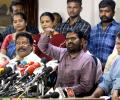
The Supreme Court has suggested Tamil film director and politician Seeman tender an unconditional apology to an actor who accused him of rape in 2011. The court is hearing Seeman's plea to quash the case against him.

We continue to celebrate the Thalaiva's 75th birthday with Divya Nair's premiere playlist that celebrates his magnetic swag, emotion and larger-than-life persona.

The Supreme Court of India has expressed concern over the increasing tendency to label failed relationships as rape, emphasizing the need to distinguish between genuine sexual violence and consensual acts within a relationship.
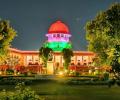
A bench comprising Justices B V Nagarathna and R Mahadevan was hearing Seeman's plea challenging a Madras high court order refusing to quash the case against him.

The Supreme Court of India has appealed to women, particularly Hindu women without sons, daughters, or husbands, to make wills to avoid potential property disputes, highlighting the increasing number of women with self-acquired property.

The Supreme Court will hear a suo motu case regarding the relocation of stray dogs in Delhi-NCR following widespread protests against an earlier order. A new three-judge bench will review the matter, focusing on the implementation of animal birth control rules and the creation of adequate shelters.

The Supreme Court reserved its judgement on a plea regarding insurance coverage for doctors and health workers who died battling Covid-19 in private clinics and non-recognized hospitals. The court emphasized the importance of supporting doctors and ensuring valid claims are settled.

Anupam Kher invited his friends and colleagues from the film industry for the special screening of his second directorial, Tanvi The Great, in Mumbai.

The Supreme Court has observed that it would move cautiously while examining challenges to provisions of the Hindu Succession Act, 1956, and that it would be wary of shattering the Hindu social structure and its basic tenets that have been in existence for thousands of years.
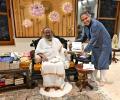
Composer Sidhant Bhatia, singer Raja Kumari, singer-producer Raghav Mehta and mixing engineer Deepak PA talk about Sounds of Kumbha, which is shortlisted for the Grammys in the Best Global Music Album category.
The Supreme Court has sought the Centre's response on a plea seeking the implementation of the 2023 Nari Shakti Vandan Act, which reserves one-third of seats for women in the Lok Sabha and state assemblies.

Kaantha is a peculiar love letter to cinema that tries to integrate various genres and craft a riveting central dilemma with great eloquence and clarity, observes Arjun Menon.

Interest in green living is rising, with clean air and open spaces becoming key selling points for residential projects, particularly as Indian cities struggle with deteriorating air quality.

Film folk got together in a musical night, celebrating Hai Junoon, an OTT show that will premiere on May 16 on JioHotstar.

'This game against Tottenham will be important for us... to be (around) the top of the league.'
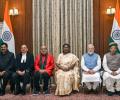
The Supreme Court's opinion on the presidential reference can impact on any number of cases if and when governors, if not the President, take a literary view of the Supreme Court's 'ppinion' on their 'discretionary powers' without reference to the rider on 'reasonable time', points out N Sathiya Moorthy.

The Rashtriya Swayamsevak Sangh will mark its centenary year with events beginning from Vijayadashami on October 2, which will include an address by its chief Mohan Bhagwat in the presence of former president Ramnath Kovind who will be the chief guest.
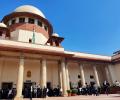
The Supreme Court has issued a directive mandating the complete disposal of leftover food inside its court complex to prevent animal bites, following concerns about stray dogs roaming the premises.

Chief Justice of India assures to look into a plea regarding stray dogs after a previous order mandated relocation of strays in Delhi-NCR.

'Today, Shah Rukh is sitting so high up that it will have to be something really spectacular for him to jump up and say, "Hey, yes, let's make this film!".'

The Supreme Court of India dissolved a marriage, instructing the couple to prioritize their child's well-being and set aside personal differences.

'We have had several films on the caste system but they are all in different decades, when sensibilities were mature enough to comprehend.' 'Today, we are in a different zone of thought.'
